
Daycare Cleaning Checklist: Top 5 Essential Tips 2024
Daycare cleaning checklist is a crucial tool for maintaining a healthy and safe environment. For daycare centers, cleanliness is not just about appearances—it’s about ensuring the well-being of children, staff, and parents alike.
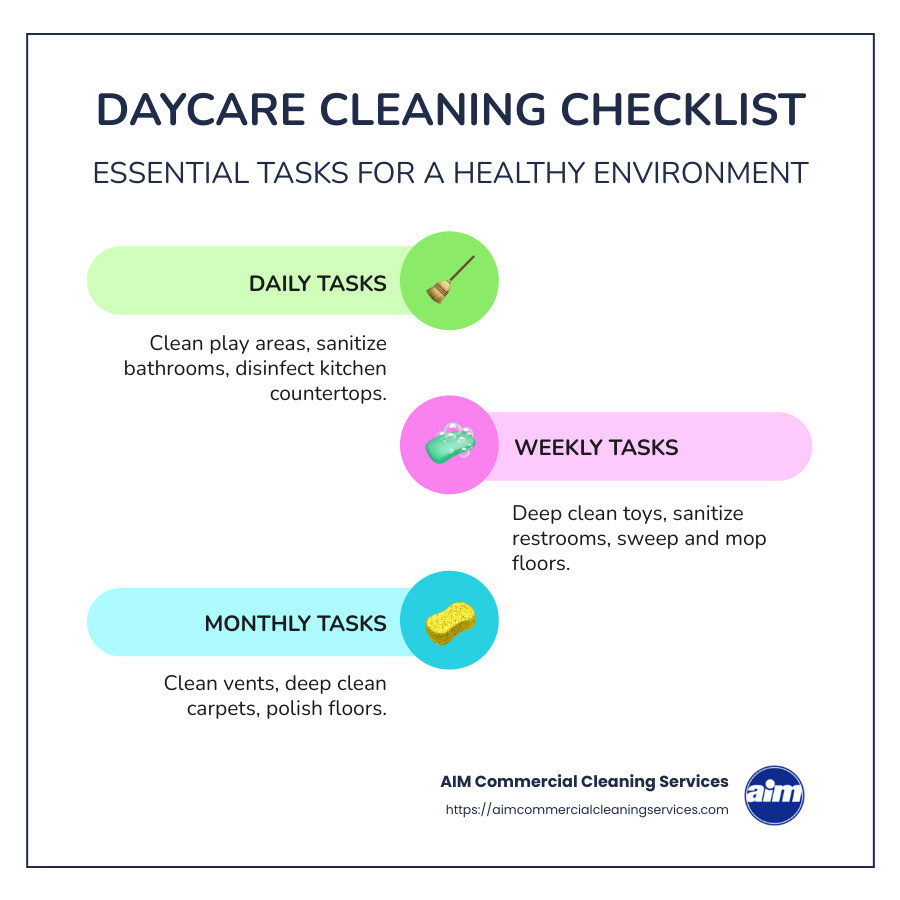
- Daily Tasks: Clean play areas, sanitize bathrooms, and disinfect kitchen countertops.
- Weekly Tasks: Deep clean toys, sanitize restrooms, and sweep and mop floors.
- Monthly Tasks: Clean vents, deep clean carpets, and polish floors.
Daycare centers operate in high-traffic environments where germs can spread quickly. As such, structured cleaning routines become essential. Adopting a comprehensive cleaning plan, supported by professional services, ensures that spaces are both safe and welcoming. By carefully adhering to such a plan, daycare facilities can offer parents peace of mind while safeguarding the health of young children in their care.
Importance of a Daycare Cleaning Checklist
A daycare cleaning checklist is not just a nice-to-have; it’s a must-have for any childcare facility. Here’s why:
Health Risks
Children are naturally curious and love to explore, which often means touching everything in sight. This makes daycares hotspots for germs. A structured cleaning checklist helps reduce the spread of illnesses by ensuring that all surfaces, toys, and common areas are regularly cleaned and sanitized.
Fact: According to research, proper cleaning and disinfecting can reduce the spread of germs by up to 80% in childcare settings.
Compliance
State guidelines and licensing laws often require specific cleaning standards to be met. These regulations are in place to protect the health and safety of children. A detailed cleaning checklist helps daycare centers stay compliant with these rules, avoiding potential fines or closures.
For instance, many states mandate regular cleaning of high-touch surfaces, like door handles and toys, to minimize germ transmission. Adhering to a checklist ensures these tasks are completed consistently.
State Guidelines
Each state has its own set of guidelines for daycare cleanliness. These guidelines dictate everything from the frequency of cleaning tasks to the types of cleaning products that can be used. By following a custom cleaning checklist, daycare centers can ensure they meet all state requirements and maintain their licenses.
For example, Florida’s Department of Children and Families (DCF) requires regular sanitation of toys and surfaces. A checklist helps daycare staff remember these essential tasks, ensuring nothing is overlooked.
In summary, a daycare cleaning checklist is vital for maintaining a clean, safe, and compliant environment. It helps manage health risks, ensures compliance with state regulations, and ultimately protects the well-being of the children in care.
Next, we’ll explore the specific daily and weekly cleaning tasks that should be included in your checklist.
Daily and Weekly Cleaning Tasks
Creating an effective daycare cleaning checklist involves detailing both daily and weekly tasks. This ensures that every area is kept clean and safe for children.
Daily Cleaning Tasks
Daily cleaning focuses on high-touch and high-traffic areas to prevent the spread of germs. Here are the essential tasks:
- Surface Cleaning: Wipe down all high-touch surfaces, like tables, chairs, doorknobs, and light switches, using a non-toxic, EPA-registered disinfectant. This minimizes germ spread throughout the day.
- Toy Sanitization: Clean and sanitize toys daily, especially those frequently used by younger children who might put them in their mouths. A food-grade sanitizer ensures safety.
- Bathroom Maintenance: Clean and disinfect all bathroom surfaces, including sinks, toilets, and floors. Keep soap dispensers and paper towels stocked to promote good hygiene.
- Floor Care: Sweep and mop floors daily to remove dirt and debris. In high-traffic areas, consider multiple cleanings throughout the day.
- Laundry Care: Wash bedding, blankets, and any cloth toys daily to reduce the risk of allergens and bacteria accumulating.
Weekly Cleaning Tasks
Weekly tasks target areas that don’t require daily attention but still need regular maintenance:
- Deep Cleaning: Focus on carpets, upholstery, and fabric surfaces. Use HEPA-filtered vacuums to remove allergens.
- Baseboards and Blinds: Dust and wipe down baseboards and blinds to prevent dust accumulation, which can trigger allergies.
- Inside Appliances: Clean the insides of microwaves, refrigerators, and other kitchen appliances to ensure a sanitary food preparation area.
- Detailed Toy Cleaning: Perform a thorough cleaning of all toys, including those less frequently used, to ensure they remain germ-free.
By following this structured approach, daycare centers can maintain a clean and healthy environment. The daycare cleaning checklist not only ensures consistency in cleaning practices but also helps in meeting health and safety standards.
Next, we’ll dig into the specific cleaning methods and products that are most effective for sanitizing and disinfecting daycare environments.
How to Clean, Sanitize, and Disinfect
In daycare settings, cleanliness isn’t just about appearance—it’s about health and safety. Let’s break down the steps to clean, sanitize, and disinfect effectively.
Cleaning Methods
Cleaning is the first step to remove dirt, germs, and impurities from surfaces. This doesn’t kill germs, but it reduces their numbers and lowers the risk of spreading infection.
- Hard Surfaces: Use soap and water for tables, chairs, and countertops. This basic step is crucial before any sanitizing or disinfecting.
- Soft Surfaces: For items like rugs and cloth toys, follow the manufacturer’s instructions for laundering. Use the warmest water setting and dry items completely.
- Carpets and Rugs: Vacuum regularly to remove dirt and allergens. For deeper cleaning, consider professional steam cleaning every six months.
Sanitizing
Sanitizing lowers the number of germs to a safe level as judged by public health standards. This step is especially important for surfaces that children frequently touch or put in their mouths.
- Toys and Eating Surfaces: Use a weakened bleach solution or an EPA-registered sanitizing spray. Make sure to rinse toys and allow them to air dry.
- Bibs and Placemats: Machine wash and dry these items after each use to maintain hygiene.
- Highchair Trays and Food Prep Areas: Wash with hot, soapy water, then sanitize. Repeat this before and after use to ensure food safety.
Disinfecting
Disinfecting destroys germs on surfaces after cleaning. This is crucial in areas with a higher risk of germ spread, like bathrooms and diaper-changing stations.
- Bathrooms and Diaper Areas: Use gloves to protect yourself. Clean with soap and water, then apply an EPA-registered disinfectant or a diluted bleach solution.
- Electronic Devices: Disinfect phones and computers with manufacturer-approved wipes to prevent damage while ensuring cleanliness.
- General Surfaces: After cleaning, apply the disinfectant and leave it on the surface for the recommended time to ensure all germs are killed.
Choosing the Right Products
Selecting safe and effective products is key. Opt for “green products” without harsh chemicals, and always read labels carefully. Avoid products with warnings like “flammable” or “danger.” Use pump sprays instead of aerosols to minimize inhalation risks and choose products labeled as “non-toxic” or “biodegradable.”
By following these steps, you ensure a safe and healthy environment for children. Cleaning, sanitizing, and disinfecting are vital components of a comprehensive daycare cleaning checklist. They help prevent the spread of germs and maintain a hygienic space for both children and staff.
Next, we’ll explore how to organize your daycare cleaning routine effectively, including tips on creating a cleaning schedule and using color coding for efficiency.
Organizing Your Daycare Cleaning Routine
An organized cleaning routine is essential for maintaining a safe and healthy daycare environment. Let’s explore how you can streamline your cleaning tasks with an effective schedule, color coding, and labeling.
Creating a Cleaning Schedule
A cleaning schedule helps ensure that every area of your daycare is consistently maintained. Breaking down tasks into daily and weekly activities prevents overwhelming workloads and ensures that nothing is overlooked.
- Daily Tasks: Focus on high-touch surfaces like doorknobs, toys, and eating areas. These should be cleaned and sanitized every day to minimize germ spread.
- Weekly Tasks: Set aside time for deeper cleaning activities, such as vacuuming carpets, scrubbing bathroom tiles, and washing windows. This keeps the daycare fresh and inviting.
Having a clear schedule not only keeps your daycare tidy but also makes it easier to delegate tasks among staff. Everyone knows what needs to be done and when, reducing confusion and ensuring accountability.
Implementing Color Coding
Color coding is a simple yet effective way to organize cleaning tasks, especially in environments with multiple staff members. By assigning specific colors to different areas or tasks, you can prevent cross-contamination and improve efficiency.
- Red: Use for bathrooms and toilets. Items like mops and cloths in this color should be reserved for these areas only.
- Green: Assign to kitchen and food preparation areas. This helps ensure that cleaning tools used here are not used elsewhere, maintaining food safety.
- Yellow: Designate for diaper changing areas. This minimizes the risk of spreading germs to other parts of the daycare.
- Blue: Use for general classroom areas. This color can be applied to cleaning tools used for desks, chairs, and floors.
By sticking to a color-coded system, you can quickly identify where each cleaning tool belongs, saving time and reducing the risk of errors.
Labeling for Clarity
Proper labeling of cleaning supplies and storage areas is vital for maintaining organization and safety. Labels provide clear instructions and help staff quickly locate the items they need.
- Cleaning Products: Clearly label each product with its intended use and any safety instructions. This is crucial for preventing misuse and ensuring the safety of both children and staff.
- Storage Areas: Use labels to identify where each category of cleaning supplies should be stored. This keeps your supplies organized and ensures that everything is in its rightful place.
- Safety Labels: Include important safety information, such as “Keep Out of Reach of Children” or “Use with Gloves,” on relevant products and storage areas.
By combining a structured cleaning schedule, a color-coded system, and clear labeling, you can create an efficient and organized cleaning routine. This not only ensures a clean and safe daycare environment but also simplifies the cleaning process for your staff.
Next, we’ll address some frequently asked questions about daycare cleaning to further clarify best practices and improve your understanding.
Frequently Asked Questions about Daycare Cleaning
What is the 3s cleaning checklist?
The 3s cleaning checklist is a straightforward approach to maintaining a tidy and efficient daycare environment. It stands for Sort, Shine, and Standardize.
- Sort: Begin by organizing and decluttering the space. Remove unnecessary items and ensure that everything has a designated place. This helps in reducing clutter and making cleaning tasks more manageable.
- Shine: Focus on cleaning and polishing surfaces. This involves regular dusting, wiping, and sanitizing to keep everything sparkling clean. Pay special attention to high-touch areas to prevent germ spread.
- Standardize: Establish consistent cleaning practices. Create routines and checklists that everyone follows to maintain the same level of cleanliness every day. This ensures that no task is forgotten and that the daycare remains consistently clean.
How do you sanitize a daycare?
Sanitizing a daycare involves a combination of cleaning schedules and the use of protective equipment to ensure a germ-free environment.
- Cleaning Schedules: Implement daily and weekly cleaning schedules. Daily tasks should include sanitizing toys, doorknobs, and eating areas. Weekly tasks might involve deeper cleaning, like vacuuming carpets and scrubbing bathroom tiles.
- Protective Equipment: Equip your staff with the necessary protective gear, such as gloves and masks, to safely handle cleaning products and prevent cross-contamination. This is especially important for areas like diaper changing stations and bathrooms.
- Proper Products: Use appropriate sanitizers and disinfectants that are safe for use around children. Ensure these products are effective against bacteria and viruses but are also non-toxic.
What should a cleaning schedule include?
A comprehensive cleaning schedule should cover all necessary tasks to maintain a clean and safe daycare environment. Here are some key components:
- Floor Cleaning: Regularly sweep, mop, and vacuum all floors. This helps in removing dirt and preventing slips and falls. High-traffic areas like entryways should be cleaned more frequently.
- Vacuuming: Schedule vacuuming sessions for carpets and rugs to remove dust and allergens. This not only keeps the space clean but also improves air quality, which is crucial for children with allergies.
- Surface Sanitization: Ensure that all surfaces, especially high-touch areas like tables, chairs, and toys, are sanitized daily. This reduces the risk of germ transmission among children.
- Bathroom Maintenance: Daily cleaning and disinfecting of bathrooms are essential. This includes toilets, sinks, and any other fixtures.
By incorporating these elements into your cleaning schedule, you can maintain a hygienic and welcoming daycare environment. This not only protects the health of the children but also provides peace of mind for parents and staff.
Stay tuned as we continue to explore more insights and strategies for effective daycare cleaning.
Conclusion
At AIM Commercial Cleaning Services, we understand that maintaining a clean and safe daycare environment is crucial for the health and well-being of children and staff. Our commitment to client satisfaction drives us to deliver exceptional cleaning solutions that meet the unique needs of daycare facilities.
Our comprehensive solutions are designed to ensure that every aspect of your daycare is spotless and hygienic. From daily cleaning tasks to specialized disinfection services, we cover it all. Our expert team uses advanced techniques and environmentally friendly products to provide a clean and healthy environment for your little ones.
We believe in building lasting relationships with our clients by consistently exceeding their expectations. Our attention to detail and personalized cleaning plans ensure that your daycare remains a safe and inviting space for children to learn and play.
Partner with us to experience the AIM difference. Let us handle the cleaning, so you can focus on what truly matters—providing a nurturing environment for the children in your care.
Ready to lift your daycare’s cleanliness? Contact us today to schedule a consultation and receive a free estimate for your daycare cleaning needs.
