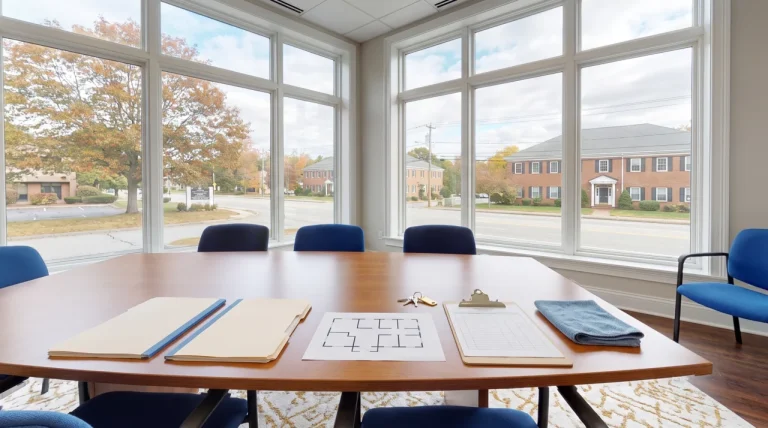
A post-construction clean can only succeed when the site is ready for it. If active trades are still cutting, sanding, or correcting finishes, a cleaning crew may remove dust one day and find the same surfaces contaminated the next. A useful checklist therefore starts before the first vacuum pass. It establishes a readiness gate, separates construction defects from cleaning misses, and defines how the facility team will accept each zone.
This checklist is for commercial owners, facility managers, project leads, and tenants preparing for handoff. It is not a hazardous-material procedure, code inspection, or substitute for the contractor's safety plan.
Start with a readiness gate
Walk the site with the project lead and cleaning provider before final cleaning begins. The goal is to decide which zones are stable enough to clean and which remain under construction. A whole building does not need to move as one unit, but each released zone should meet the same conditions.
- Overhead work, cutting, sanding, and painting are complete in the released zone.
- Permanent power and sufficient lighting are available where required for safe inspection.
- Large contractor debris, packaging, and trade materials have been removed or assigned to a named owner.
- Surfaces are cured or protected according to the applicable product or trade instructions.
- Access, keys, elevators, loading areas, water, waste handling, and building security have been arranged.
- Unknown residue, damaged finishes, and safety hazards are logged rather than handed to the cleaner without direction.
If one condition fails, do not hide it inside the cleaning scope. Mark the zone held, assign the issue, and release it later. That decision protects both the schedule and the finished materials.
Use three cleaning passes with different purposes
| Pass | Purpose | Typical checks | Release condition |
|---|---|---|---|
| 1. Bulk and access | Clear assigned nonhazardous remnants and create safe access for detail work | Assigned debris, labels approved for removal, cabinet and room access, floor protection status | No loose assigned material prevents detailed cleaning |
| 2. Fine-detail clean | Remove settled dust and residue from finished surfaces in a controlled sequence | High ledges, trim, millwork, fixtures, glass edges, vents, floors, and inside agreed cabinets | Named surfaces are visibly clean under normal inspection lighting |
| 3. Handoff touch-up | Correct cleaning misses after punch work and traffic are complete | Entry paths, fingerprints, final glass, restroom fixtures, baseboards, floor edges, and touchpoints | Exceptions are closed or accepted in writing by the designated facility lead |
The labels are less important than the purpose. A team may use different phase names. What matters is that bulk access, fine-detail work, and final touch-up are not treated as one vague task.
Inspect from high to low, then clean the path out
Within a released zone, sequence work so settled particles are not pushed back onto completed surfaces. Start with accessible high ledges and horizontal surfaces, move through fixtures and vertical details, then finish floors and the exit path. Do not describe this sequence as permission to disturb construction dust of unknown composition.
Respirable crystalline silica is a specific concern when construction work involves materials such as concrete, mortar, brick, or stone. OSHA's construction guidance explains that its silica standard restricts dry sweeping or dry brushing when those activities could contribute to silica exposure, unless wet sweeping, HEPA-filtered vacuuming, or another exposure-minimizing method is not feasible. The responsible contractor or employer must determine the applicable controls. A cleaning provider should not be expected to identify or remediate an unknown hazard through an ordinary janitorial scope.
Assign the work before something is missed
| Observed item | Likely owner to confirm | Cleaning action |
|---|---|---|
| Paint overspray, adhesive, grout haze, or sealant on a sensitive finish | General contractor or responsible trade | Hold removal until the material and approved method are confirmed |
| Loose packaging or construction offcuts | Project lead under the contract's debris terms | Remove only if the item is assigned and nonhazardous |
| Dust on released, finished surfaces | Cleaning provider | Clean with the agreed surface-safe method and record exceptions |
| Scratch, chip, leak, failed seal, or incomplete installation | Responsible trade or project lead | Photograph or log; do not present a construction defect as a cleaning correction |
| New contamination after a zone was accepted | Party controlling later access | Record as rework and obtain approval before repeating the task |
This matrix is a starting point, not a contract interpretation. The actual construction agreement and cleaning scope control. Put disputed or unclear items in an exception log so the project lead can decide them before they become schedule arguments.
Room-by-room post-construction cleaning checklist
Entrances and shared paths
- Remove approved protective film, tape, and temporary labels without damaging the finish.
- Clean doors, frames, handles, thresholds, glazing, and sidelights.
- Inspect corners, floor edges, walk-off areas, and elevator tracks included in scope.
- Confirm the clean exit path will not be used for active material movement.
Offices, meeting rooms, and finished millwork
- Inspect high ledges, trim, door tops, sills, baseboards, and horizontal surfaces.
- Clean inside cabinets and drawers only where the scope includes them and they are empty.
- Check hardware, switch plates, partitions, and glass for dust and fingerprints.
- Log chips, scratches, adhesive, or finish defects instead of attempting an unapproved correction.
Restrooms and break areas
- Clean fixtures, partitions, mirrors, counters, and accessible cabinet interiors included in scope.
- Verify drains, water, and installed fixtures are operational before treating residue as a cleaning miss.
- Separate ordinary dust from grout, caulk, paint, or installation defects that belong on the construction punch list.
- Confirm dispensers and consumables only if stocking is part of the agreed handoff.
Floors and glass
- Identify each flooring and glass type before choosing tools or chemistry.
- Remove loose soil with the agreed exposure-control method, then clean edges and main traffic areas.
- Inspect glass from more than one angle under normal lighting; record scratches separately from residue.
- Do not apply finish, sealer, or restoration treatment unless it is named in the scope and compatible with the manufacturer's requirements.
Run a zone-based acceptance test
Do not wait until the final hour to inspect the entire property. Divide the project into practical zones such as a floor, tenant suite, lobby, or restroom group. For each zone, record:
- Release time and person authorizing cleaning.
- Areas and tasks included in that release.
- Exceptions discovered before or during cleaning.
- Correction owner and due time.
- Acceptance time and the facility representative who accepted it.
Use normal viewing angles and the lighting available for occupancy. The standard should be specific enough to repeat, but it should not pretend that a visual inspection can certify air quality, sterility, code compliance, or the absence of every particle.
A short hypothetical handoff
Imagine a two-suite professional building scheduled for tenant move-in on Monday. On Thursday morning, Suite A passes the readiness gate, but millwork touch-ups continue in Suite B. The cleaning team completes bulk access and fine-detail work in Suite A, and the facility lead accepts it Friday morning. Suite B remains held until the trade completes sanding and the project lead releases it. The team then cleans and inspects that suite without recontaminating the accepted area.
The lesson is not that every project needs this exact timeline. It is that zone releases make dependencies visible. They keep unfinished trade work from being counted as a cleaning failure and reduce avoidable rework.
Turn the checklist into a clear scope
AIM's post-construction cleaning service covers commercial cleanup work in Eastern Massachusetts and Southern New Hampshire. Before requesting a quote, bring the floor plan or zone list, expected release sequence, surface types, access rules, known residue, debris responsibility, and acceptance contact. That information lets the provider price the work that is actually ready instead of guessing around unresolved construction tasks.
A successful handoff is not simply a clean-looking room. It is a documented transition: the zone was ready, the scope was clear, exceptions had owners, and the facility lead accepted the finished condition.