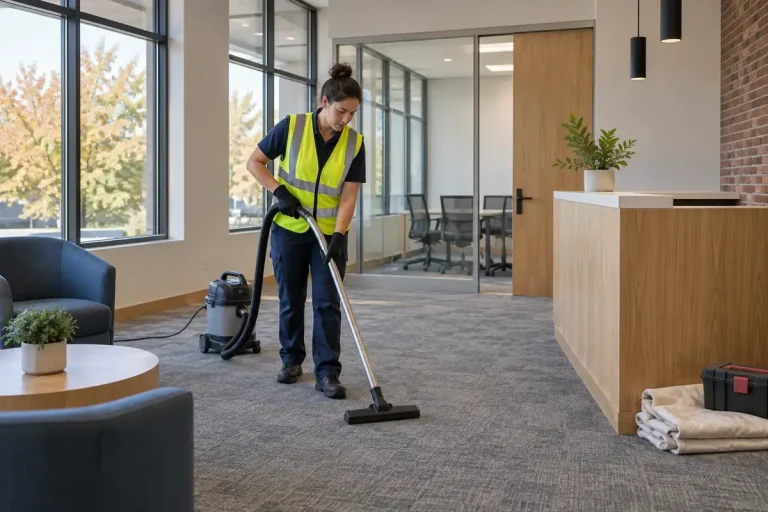
A useful commercial floor maintenance schedule is based on traffic, weather, floor material, and appearance standards—not a single calendar rule. In Massachusetts, road salt, sand, and wet entryways can increase wear during winter, while schools, gyms, retail stores, and medical offices may need more frequent attention year-round. Mannington’s seasonal floor-care guidance explains why entryway procedures should change with weather and traffic.
Start with three levels of floor care
Choose the permitted work before choosing its interval. Check the maintenance instructions for the exact floor product and any applied finish, including whether polishing, burnishing, or finish removal is appropriate. Armstrong’s resilient-floor maintenance guidance distinguishes surfaces that require polish from those where it is optional. The table lists possible categories of work, not treatments suitable for every floor.
| Level | Typical work | Schedule trigger |
|---|---|---|
| Routine | Mat care, dust mopping, vacuuming, damp mopping | Daily or as traffic requires |
| Periodic | Machine scrubbing, carpet extraction, burnishing, edge detailing | Visible soil, reduced gloss, traffic-lane buildup, or measured interval |
| Restorative | Finish removal and recoating, deep extraction, stone restoration | When periodic care no longer restores an even appearance |
Set frequency by zone, not just by building
An entry vestibule may need several checks each day while a private office needs much less. Divide the facility into high-, medium-, and low-traffic zones. Entrances, elevators, checkout lanes, cafeterias, and main corridors usually receive the most abrasion. Conference rooms, private offices, and storage areas can follow a lighter cycle.
Match the method to the actual surface. Resilient tile, luxury vinyl, sealed concrete, ceramic tile, natural stone, and carpet do not use the same chemicals or machines. AIM's commercial floor care services page outlines the role of professional maintenance within a larger cleaning program.
A practical starting schedule
Use these review points as a starting framework, not a requirement to perform every treatment at that interval.
- Every day: remove grit at entrances, clean spills promptly, and complete the specified vacuuming or mopping route.
- Every week: inspect edges, corners, mats, grout lines, and traffic lanes; correct buildup before it spreads.
- Monthly or quarterly: review whether machine scrubbing, extraction, or burnishing is restoring the expected finish.
- Seasonally: increase entrance and hard-floor care before winter, then assess finish and carpet condition after salt season.
- Annually: compare the floor's condition, service log, and replacement risk before approving restorative work.
Use condition signals to adjust the plan
Treat a slip hazard separately from a schedule review. Report it and follow the facility’s immediate correction process. For covered workplaces, OSHA’s walking-working surface requirements call for regular and as-needed inspection and correction before employees use a hazardous surface again. If immediate correction is not possible, guard the hazard to prevent use until it is corrected.
For appearance and soil buildup, compare inspections with the service log:
- Reassess the work if grit or soil is still present immediately after a task. Confirm that the task was completed effectively and the method suits the surface before adding more visits.
- Shorten the interval if an effective clean meets the agreed appearance standard but soil returns before the next planned visit. Note changes in traffic or weather and adjust that zone’s routine or periodic cycle.
- Retain the interval if the zone meets the agreed standard through the planned interval. Do not order restorative work merely because a calendar date arrives.
Record the observation time, action, and next review date, then check whether the adjustment works under comparable conditions. This is a planning framework, not a fixed interval or an AIM service protocol.
Turn the schedule into an accountable scope
Record the floor type, square footage, traffic level, cleaning method, frequency, and expected result for each zone. Add who moves furniture and when an area can be taken out of service. A walkthrough with a commercial cleaning team can convert that map into a realistic maintenance plan and price.