Before a commercial window-cleaning visit, identify the glass to be cleaned, what could block access to each face, and who can authorize or resolve those conditions. Give the provider location-specific information rather than assuming that a window visible from outside is also accessible from inside.
This checklist is for coordinating access—not choosing a cleaning frequency, estimating a price, or selecting equipment. Treat the items as matters to confirm with your provider and building management, not as established AIM requirements.
Map the glass and distinguish interior from exterior access
Use a floor plan or room list to label each window group by room, entrance, or building side. Record whether the request covers the interior face, exterior face, or both. Keep uncertain locations marked “to confirm” rather than treating them as included.
- Identify storefront and entrance glass separately from windows in offices, meeting rooms, and restricted spaces.
- Clarify which interior glass partitions, sidelights, or other glass surfaces are part of the request.
- Flag glass whose location or access is unclear, including windows behind displays or in tenant-controlled rooms.
- Describe visible damage, attached films, decals, or unusual residue for discussion without assuming removal or repair is included.
AIM’s commercial cleaning services include interior and exterior window cleaning. Your access notes should still identify the particular glass being discussed; the service category alone does not define the visit’s coverage.
Record interior obstructions and responsibility
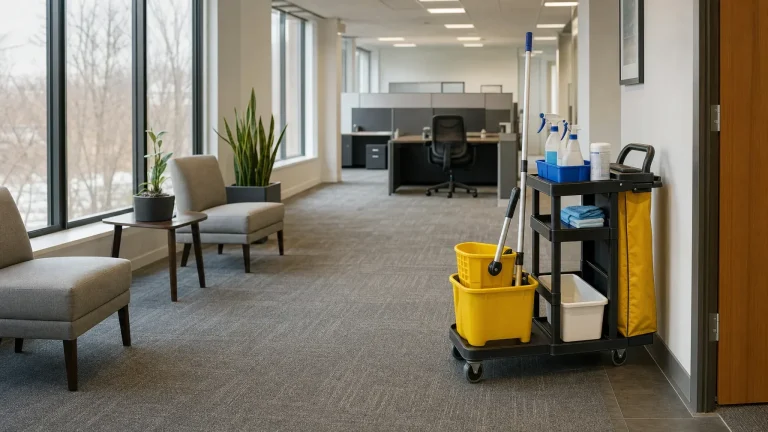
Walk the interior route to each window group. Note furniture, blinds, shades, display merchandise, plants, and equipment that could limit access. Describe the condition rather than deciding how the provider should work around it.
For each obstruction, agree who is authorized to handle it and whether it must be addressed before the affected glass can be cleaned. Staff may be able to secure loose belongings under workplace policy, while furniture, fixtures, and sensitive displays need separate discussion. Do not assume the cleaning team will move them.
- Blinds and shades: identify who may operate them and flag damage or handling restrictions.
- Displays and furniture: record what blocks the glass and who will resolve the obstruction.
- Restricted rooms: name the authorizing contact and any escort requirement without placing credentials in the handoff sheet.
- Sensitive materials: flag nearby paperwork, electronics, or fragile items and ask what preparation is needed.
Identify exterior constraints and building permissions
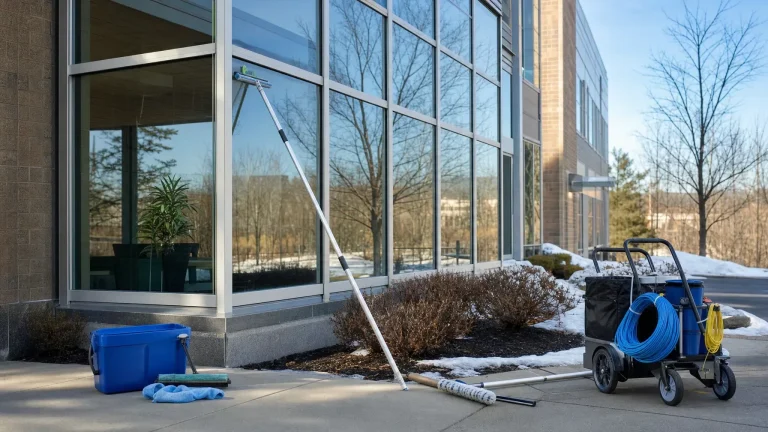
Record the conditions outside each window group: shared walkways, entrance traffic, landscaping, parked vehicles, deliveries, and neighboring property boundaries. Identify who controls those spaces. Access through a neighboring property or shared area should not be treated as available without confirmation.
Ask building management which approvals, access restrictions, or documentation requirements apply to the proposed work. Pass those requirements to the provider and establish who will obtain any needed authorization. A requested permission is not the same as an approved arrangement.
Leave access methods and safety decisions to the responsible parties
The facility manager supplies building information and coordinates permissions. The provider assesses how the proposed glass can be reached and cleaned, with building management involved where its approval is needed.
- Does any window group need an access assessment before the work can be confirmed?
- What space or building access would the provider’s proposed equipment require?
- What work-area separation or temporary access restrictions does the provider identify, and who must authorize and communicate them?
- If conditions prevent access, how will the affected glass and next steps be reported?
Note Do not climb, operate access equipment, remove windows, or move heavy furniture to prepare for the visit. Refer unresolved access and safety questions to the provider and responsible building personnel.
Coordinate occupied rooms, entrances, and changes
Match the glass locations to the activities around them. Note meetings, customer-facing displays, busy entrances, and rooms that cannot be released without notice. Ask the provider whether the proposed sequence can accommodate those constraints rather than promising uninterrupted use of every area.
Name an on-site contact who can answer glass-location questions and reach the person authorized to approve changes. Agree how locked rooms, new obstructions, or unavailable exterior areas will be reported. Request that any inaccessible glass be identified by the same location labels used in your handoff.
Complete a window-access handoff sheet
Copy the fields below for each window group with distinct access conditions. Keep unresolved items visible and assign a contact to each, so a blank field is not mistaken for confirmation.
| Handoff field | Information to supply or confirm |
|---|---|
| Glass location | Room, entrance, or building-side label; interior face, exterior face, or both; coverage questions. |
| Interior access | Obstructions, blinds, displays, restricted-room access, and the authorized person handling each item. |
| Exterior access | Walkways, entrances, vehicle activity, landscaping, neighboring boundaries, and who controls the area. |
| Permissions | Building-management requirements, approval contact, and status: confirmed or awaiting confirmation. |
| Occupied-area coordination | Room availability, entrance use, activities that cannot be interrupted, and staff-notice responsibility. |
| Provider questions | Access feasibility, equipment-related space needs, work-area separation, and unresolved conditions. |
| Contact and reporting | On-site contact, change approver, and agreed route for reporting inaccessible glass or changed conditions. |
Keep this sheet focused on access. Use the separate guide to how often commercial windows should be cleaned for frequency planning, and address pricing separately from access readiness. For service information, see AIM’s commercial window-cleaning page. Bring the completed handoff to the provider discussion so each location has either a confirmed arrangement or a clearly assigned open question.