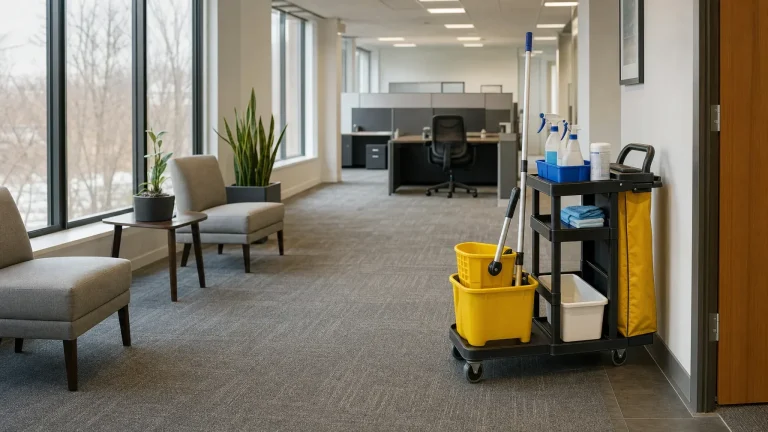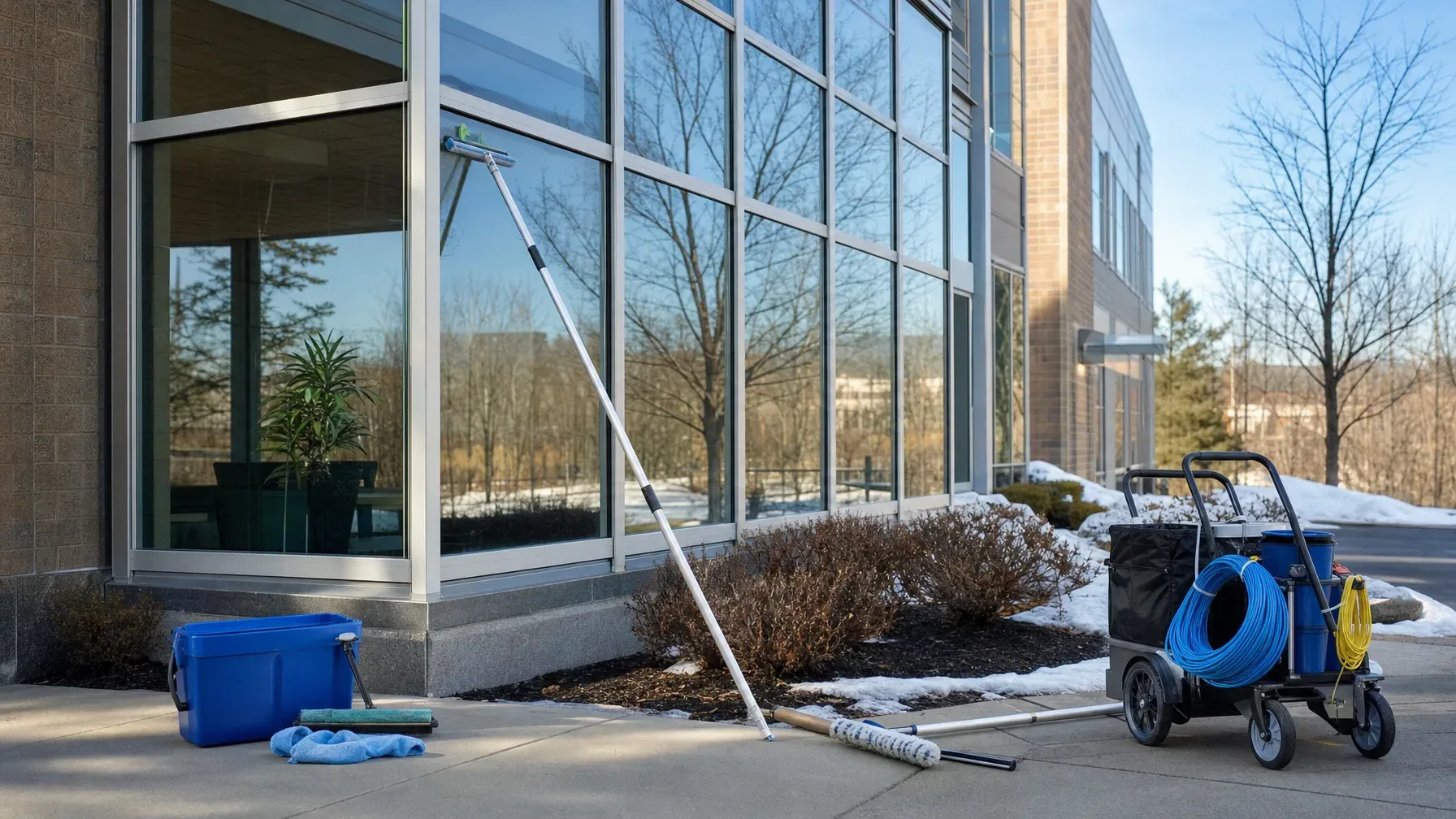
A clear commercial window-cleaning request identifies the glass, its location and the face you want cleaned. “All windows” leaves those details open to interpretation.
Start with a surface-and-side inventory. Its purpose is to describe what you want considered, not to decide cleaning methods, access arrangements, frequency or cost. Keep requested work separate from work the provider has confirmed.
Separate the glass location from the face being requested
Use room names, entrance labels or building elevations that your facility team and provider can recognize. For each window group, record the interior face, exterior face or both. Split the entry whenever the requested work differs within that group.
- Perimeter windows: distinguish the room-facing surface from the outdoor-facing surface. Do not use the room location alone to imply which face is included.
- Entrance and storefront glass: identify door glass, surrounding fixed glass and display windows separately where their requested coverage differs.
- Glass located entirely indoors: list partitions, interior doors or other glass as separate inclusion questions. Label faces by the adjoining spaces rather than calling either face “exterior.”
- Uncertain surfaces: record the location and mark the identity or coverage as needing confirmation rather than assigning it to a general “all glass” category.
Scope and access are related but different. Scope asks which surfaces are requested. Access asks how the confirmed surfaces can be reached and what permissions or preparation are needed. Keep access planning in the commercial window-cleaning access checklist rather than using access assumptions to silently include or exclude glass.
Describe visible concerns without diagnosing them
Record what you can observe from a normal, permitted viewing position: fingerprints, dust, streaks, visible marks or residue. Identify the affected location and face when you can. If you cannot tell which face carries a mark, say so.
Avoid turning an appearance concern into a diagnosis or treatment instruction. Describe a mark as a mark, not as a removable stain. Flag suspected damage, films, decals, specialty glass or unusual residue for assessment. A note about a concern is not confirmation that cleaning will resolve it or that removal, repair or restoration is included.
List adjacent components separately
The word “window” can mean the glass alone or the surrounding assembly. Remove that ambiguity by naming frames, sills, tracks and screens separately if you want them discussed. Keep blinds, shades and other nearby fixtures outside the glass request unless their inclusion is expressly confirmed.
Note An item on your inventory is a discussion request, not an agreed service. Frames, sills, screens, partitions, specialty glass and stain removal all require explicit confirmation rather than an assumption of inclusion.
Use a repeatable glass-scope worksheet
Copy the following fields into your facility notes or spreadsheet. Create a separate entry when the location, face, concern or requested inclusion changes. Leave unknown details visible rather than filling them with assumptions.
- Location and surface: record the building area, room or entrance label, and the specific glass being discussed.
- Requested face: specify interior, exterior, both, a named adjoining-space face, or uncertain.
- Observed concern: describe the visible condition and where it appears, or record that no particular concern was noted.
- Requested inclusion: mark glass cleaning as requested, not requested, or awaiting a facility decision. List any adjacent components separately.
- Provider confirmation needed: record any coverage question, surface uncertainty, limitation or possible separate assessment.
- Confirmed outcome: mark included, excluded, or pending assessment, and record the provider’s clarification.
Resolve pending items before treating the scope as agreed
Ask the provider to review the inventory by location and face. Confirm which requested surfaces are included, which are excluded and which cannot be confirmed without assessment. Ask whether any observed concern falls outside the proposed cleaning work, and record the limitation beside the affected surface.
AIM lists interior and exterior glass within its commercial cleaning services. That offering provides a starting point for discussing commercial window cleaning, but your facility’s specific surfaces and requested faces still need to be identified and confirmed.
Keep frequency and pricing as separate decisions rather than trying to settle them through the surface inventory. For scheduling considerations, use the guide to how often commercial windows should be cleaned. The finished inventory should answer a narrower question clearly: which glass and which faces are requested, and what still needs confirmation?