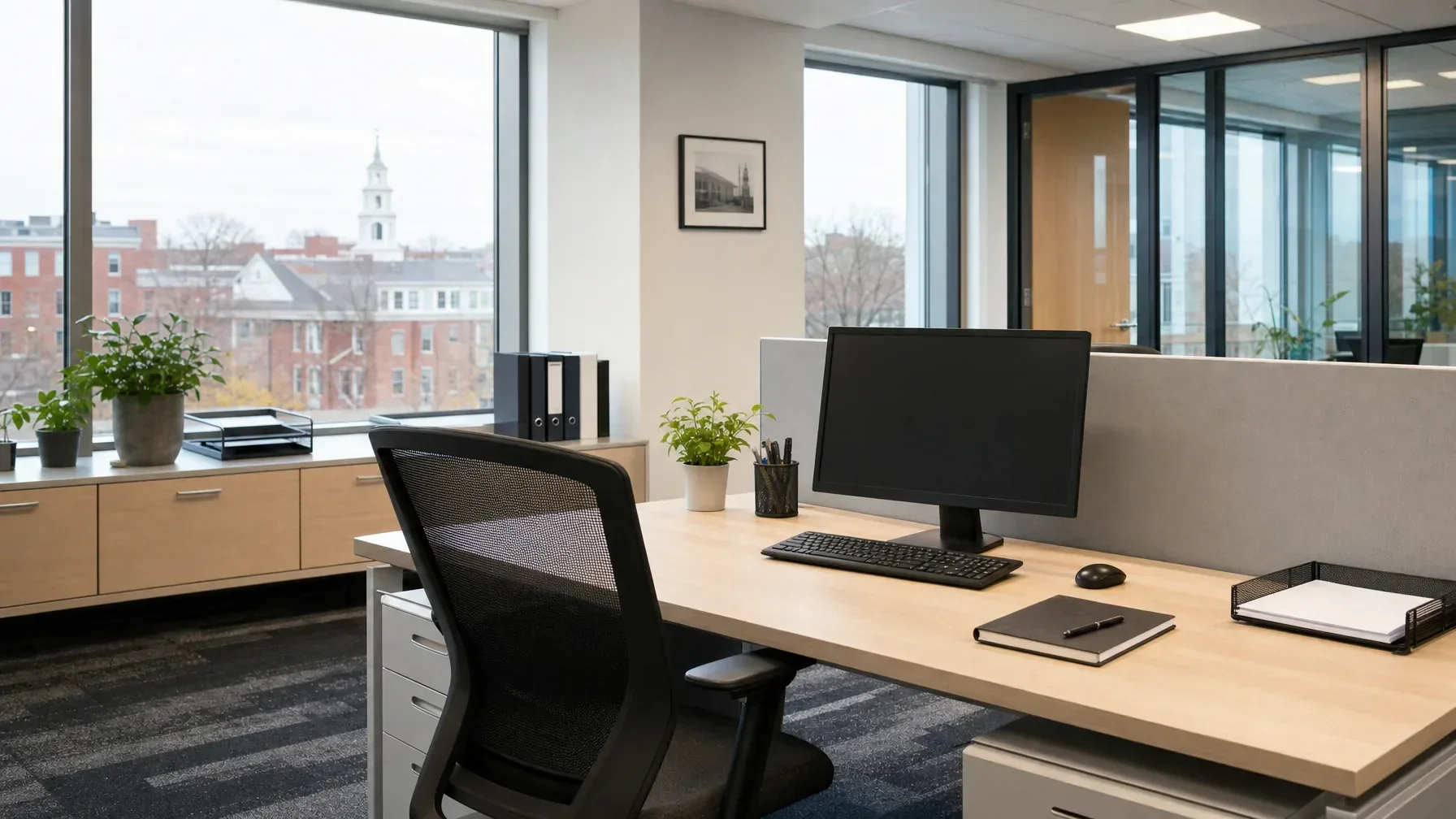
Before recurring office cleaning, employees should put away loose papers and personal belongings from the desk surfaces included in the cleaning agreement, secure sensitive materials under workplace policy, and report anything that must remain untouched. They should not be expected to clean the desk themselves or decide which equipment the cleaning team may handle.
The office manager’s role is to turn those expectations into a repeatable routine: identify the surfaces to clear, set a preparation deadline, assign responsibility for shared desks and communicate exceptions through an agreed contact route.
Confirm which desk surfaces need to be accessible
Start with the existing cleaning agreement, not a blanket instruction to “clear everything.” Confirm whether it includes exposed desktops, shared workstations or particular desk areas. A clear desktop does not, by itself, authorize cleaning drawers, equipment or surfaces outside the agreement.
If the agreement leaves desk access unclear, resolve that question with the provider before sending employees a preparation notice. The guide to defining a commercial cleaning scope of work can help frame the distinction between an included surface, an access requirement and an excluded task.
Employee desk-readiness checklist
Preparation means making those surfaces available, not completing the cleaning work.
- Put away loose papers, notebooks and folders. Use their appropriate storage location rather than shifting the pile onto another workstation.
- Secure confidential or sensitive materials according to workplace policy. Do not leave records exposed with a note asking cleaners to work around them.
- Store personal belongings and valuables. Remove cups, food containers and small personal items from the agreed work surface.
- Keep active work separate from waste. Put materials you need to retain in their proper storage location rather than leaving their status for someone else to interpret.
- Leave electronics, cables and shared equipment in place unless your workplace has given explicit preparation instructions. Report anything that blocks the surface.
- Tell the designated office contact about items that cannot be moved or must remain untouched. Do not assume an informal desk note changes the cleaning instructions.
Make “leave alone” instructions specific
Use an agreed exception record rather than relying on scattered sticky notes or verbal messages. Identify the workstation, the item or surface, the restriction and the person who can answer questions. Describe the location without copying confidential information into the record.
- Location: Record the workstation or desk identifier.
- Item or surface: Identify what the instruction applies to.
- Restriction: Specify whether the item must not be touched, moved or cleaned, as applicable.
- Surrounding access: Record whether nearby surface cleaning has been confirmed or remains unresolved.
- Contact and review trigger: Name the responsible person and state when the restriction should be reconsidered.
Send relevant restrictions to the cleaning provider through the agreed communication channel. Ask for confirmation that the instructions are understood and whether they prevent any scheduled work. If desk labels are used, agree on their wording and placement so their meaning is clear.
Note An accessible surface is not permission to handle everything on it. Keep questions about monitors, keyboards, docking equipment, cables and personal devices marked as unresolved until the responsible office contact and provider confirm the boundary.
Assign responsibility for shared desks
For shared workstations, name who clears personal materials after use and who checks readiness before cleaning. Do not leave that responsibility with “whoever used it last” unless the office has a workable way to identify that person.
Distinguish personal belongings from equipment intended to stay at the workstation. If a shared desk remains occupied during the cleaning window, the designated contact should coordinate access with the provider rather than asking employees or cleaners to improvise.
Reusable employee notice
Adapt the proposed notice below to your actual agreement. It is a communication template, not an existing AIM policy. Complete the fields and confirm any handling instructions before sharing it.
Subject: Please prepare agreed desk surfaces for recurring cleaning
Please have the following desk surfaces or workstations ready: ______. Preparation deadline: ______. Scheduled cleaning window: ______. Put away loose papers and personal belongings, and secure sensitive materials according to workplace policy. You are being asked to make the agreed surfaces accessible, not to perform the cleaning.
Leave equipment and cables in place unless covered by these confirmed preparation instructions: ______. If no equipment movement is requested, state that here. The role responsible for checking shared-desk readiness is: ______.
If an item must remain untouched, a surface cannot be cleared or the desk will still be occupied, contact the designated person before the preparation deadline. Contact name or role: ______. Approved contact channel: ______. Identify the workstation and restriction without including confidential contents. Our office contact will coordinate exceptions with the cleaning provider.
Manager follow-up: access issue or scope issue?
When a desk surface appears untouched after cleaning, check the agreement and access conditions before treating it as missed work. Keep the follow-up focused on the particular surface and scheduled task.
- Included but inaccessible: Ask whether papers, belongings, equipment or occupancy prevented the work. Address readiness and confirm how the provider should report blocked surfaces.
- Not included: Treat the request as a possible scope change, not a task the provider omitted.
- Included and accessible: Raise the specific observation with the provider and ask what occurred.
- Restricted or unclear: Resolve the permission question before the affected work proceeds, then update the exception record and staff instructions.
AIM offers office cleaning among its commercial cleaning services. For your workplace, keep the recurring desk routine tied to the actual agreement: employees secure their materials, the manager communicates access and restrictions, and the provider confirms what work can proceed.